Recordings › Rașcov

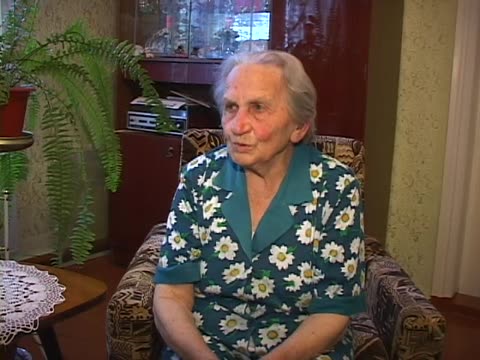
MDV 199 · Ida Nukhimovna Boiarskaia

Rașcov, Moldova 6 June 2006 Interviewed by Dov-Ber Kerler, Moisei Lemster Part 2 of 2 52 min · 4 passages

One conversation with Ida (Udl, Udye) Nukhimovna Boiarskaia, continuing over MDV 198, MDV 199.

Loading the player…
Passages

0:00

Boiarskaia speaks about a local intellectual, Dr. Yisroel Ayzen, who was also confined to the Vastavka ghetto. She then talks about her life at the beginning of the war, when her family fled Rîbniţa toward Krasni Okny in 1941. Boiarskaia describes how Dr. Ayzen collected valuables from the prisoners and was able to arrange a release. Boiarskaia's family returned to Rîbniţa.

From the machine transcript

Asked whether people sang in the ghetto, Boiarskaia says nobody did, because people were afraid. She tells of a learned man named Yisroel (?), a fellow prisoner who wrote down life in the ghetto on scraps of paper and died after the war. She recounts how her family fled in 1941 toward Krasne (Krasni Okny), where Germans and Romanians seized thousands of people. The learned man collected gold from the prisoners to buy them off; the guards got drunk and the family escaped through the hills and villages back to their town, where a great slaughter was under way. She answers Kerler's questions about who carried out the killings, saying it was the Romanians, with the Germans passing through earlier. The passage ends with Kerler's question about vodka among Jews in her village.

Names Krasni Okny as the place of capture, the buying-off of the guards and the killings in the home town, and says nobody sang.

5:02

Boiarskaia speaks about prewar Jewish life and recalls a positive relationship between Jews and non-Jews. She then answers dialectological questions from the AHEYM Yiddish linguistic questionnaire.

From the machine transcript

Boiarskaia first says her father drank little wine in old age, only a little brandy for the Sabbath. Most of the passage is Kerler's questionnaire, in which he gives Russian words and short sentences for her to put into Yiddish. Items include greetings, thanks, house/houses, mouse, belly, colours, adjectives (old, healthy, deaf, mute), time and place adverbs, pronouns, numbers and years, and verbs of speaking, hearing, seeing and coming. Also asked are terms for Christians, convert and field worker, Sabbath-day words, and religious terms such as 'light of paradise' for the dead and cantor and rich man in the synagogue. She says the few Jews in the village lived on good terms with their neighbours, who did not call them 'zhid'. Lemster joins with some suggested forms.

Besides the questionnaire, it shows her remark on her father's drinking and on good neighbourly relations.

45:13

The team concludes the interview with Boiarskaia.

· MCO
From the machine transcript

The interview closes in a brief exchange in which Boiarskaia says she understood the interviewers were writing a book, and Kerler responds.

45:48

The camera collects footage of the Rîbniţa synagogue.

Footage · MCO
From the machine transcript

Camera material in the synagogue (Rîbniţa according to the catalogue; the transcript does not name it) with Kerler and Lemster talking mostly in Russian, with some Yiddish, about the building. They discuss the painted decoration and the ceiling, and who built and painted it; another voice asks a short question. The transcript is fragmentary.