0:00
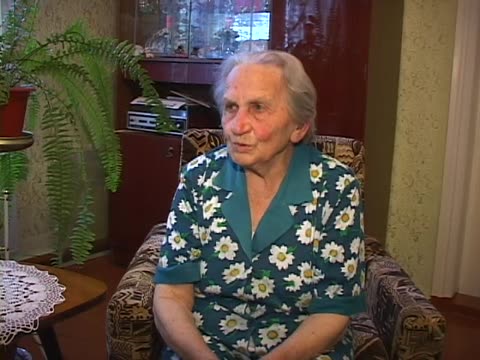
Boiarskaia speaks about a local intellectual, Dr. Yisroel Ayzen, who was also confined to the Vastavka ghetto. She then talks about her life at the beginning of the war, when her family fled Rîbniţa toward Krasni Okny in 1941. Boiarskaia describes how Dr. Ayzen collected valuables from the prisoners and was able to arrange a release. Boiarskaia's family returned to Rîbniţa.
Asked whether people sang in the ghetto, Boiarskaia says nobody did, because people were afraid. She tells of a learned man named Yisroel (?), a fellow prisoner who wrote down life in the ghetto on scraps of paper and died after the war. She recounts how her family fled in 1941 toward Krasne (Krasni Okny), where Germans and Romanians seized thousands of people. The learned man collected gold from the prisoners to buy them off; the guards got drunk and the family escaped through the hills and villages back to their town, where a great slaughter was under way. She answers Kerler's questions about who carried out the killings, saying it was the Romanians, with the Germans passing through earlier. The passage ends with Kerler's question about vodka among Jews in her village.
Names Krasni Okny as the place of capture, the buying-off of the guards and the killings in the home town, and says nobody sang.