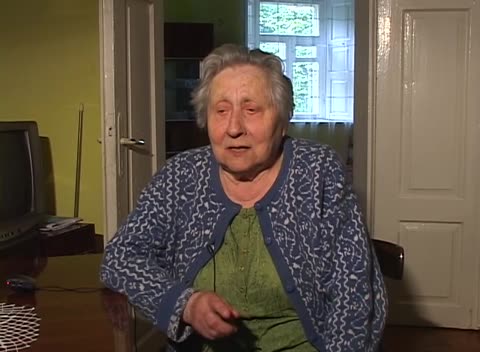
Plotnik continues to watch a recording of a Bershad ghetto song (sung by Iosif Kogan). She then sings again the Yiddish song about the difficulty to collect documents after evacuation.
A recording of a ghetto song is played back, then Plotnik sings again the song about the difficulty of gathering documents (papers) and running to lawyers. Kerler and Lemster ask where she heard it (after the war) and whether she knew other songs, such as those of Zelik Bardichever (?). She says she does not remember them.
Includes questions about other ghetto songs and where she learned the song.
Plotnik says that hearing about Dumbraveni makes her weep. She answers Lemster's questions about the colony: its Romanian head, the Jewish leader deported in the 1940s, and the good soil. She also mentions crops and a non-Jewish neighbour who sold pork and was sent away, and says relations with neighbours were good.
Covers colony leaders, deportation of a Jewish leader and a non-Jewish neighbour.
Plotnik recalls coming back home after the camp to find the cellar dug up by people looking for gold, and a later visit to Dumbraveni with her boss. She describes yearly visits by her son to the family graves and walking the cemetery with her sister. Lemster asks about other people from Dumbraveni who might be interviewed, and the talk turns to one now in Israel.
Adds the cemetery visits, her son's yearly trips and suggestions of other Dumbraveni natives to interview.
Kerler closes the interview, noting the date of 1 June 2006 and that this was their second meeting with Plotnik. He thanks her and wishes her good health.