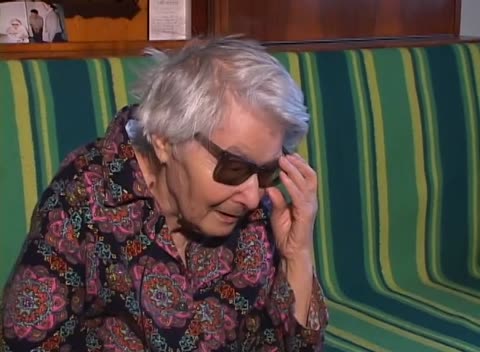
Grinberg answers Lemster's questions about meeting her husband, who was her cousin and visited her, and about their wedding. The invitations went to the Jews of the town, with a chuppah and a large gathering held in a big room on her street. She says there was no Yiddish dancing or singing that she can recall, and she says what gifts were given.
Also covers the wedding venue, dancing, songs and gifts, and the failed request for a song.
Lemster asks Grinberg about the cemetery, what Yiddish word is used for it, and what was said at graves. She describes saying Kaddish and praying in one's own language, and the idea that the dead should not be made to run. They discuss the evil eye and remedies such as coals in water. She then speaks about what young people did at night, the absence of drinking among Jews, and how few Jews remain in Fălticeni today.
Also includes the cemetery and prayer at graves, the evil eye, drinking, and the present small Jewish population.
Grinberg first answers Lemster about God and what one must observe. She mentions dreams, and the belief that those who do not keep His commandments go to hell. The rest is dialectological elicitation, with Romanian and Russian prompts. Items include words for the bridge, attic, window, colours, animals, the dove, near and far, the cold, greetings, mazel tov, a wealthy man, a pious or honest Jew, parts of the body, numbers, and words such as 'such' and 'sudden'. Kerler and her daughter, who speaks Romanian, contribute at times.
Also includes the questionnaire items, the dreams and the religious opinions.
Grinberg speaks about the future of Yiddish and about the many Jews who no longer know it. Kerler asks about her late husband, described as a khabadnik. She explains the word and talks about Chabad and Lubavitch. Her daughter recalls a rabbi (name not recovered) who took in about a hundred orphaned children from Transnistria after the war and married some of them.
Also includes the orphan-adopting rabbi and Transnistria.
The interview closes with thanks. Lemster asks Grinberg for another song, but she and her daughter say they cannot sing, and Kerler says he cannot either. The end of the passage is garbled.