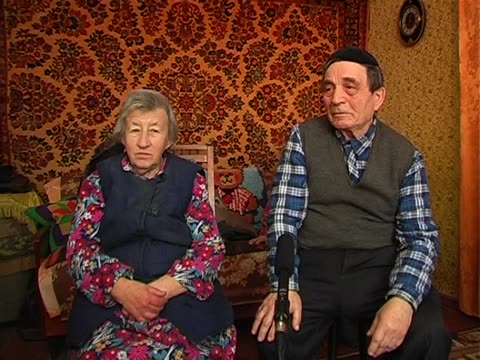
Vaisman recounts the war: evacuation toward the Caucasus and then to Central Asia, where he worked, and being drafted into the army and sent to the front after a short course. He served for about a year in Romania, catching deserters, and afterwards fought Bandera partisans in the Baltic region. He mentions Jewish comrades, a commander, being questioned about informing, and release from the army. The second informant tells of an old Jewish tailor who stayed under German occupation with his wife and two sons and was hidden by non-Jews. He hid under a bridge with a crying infant and was spared by a German soldier. Kerler also asks whether one could pray in the army.
Adds the tailor's story told by the second informant, the Bandera/Baltic fighting, and the question about praying in the army.
Kerler asks what was eaten at Hanukkah and what customs were kept. The second informant mentions latkes made of buckwheat flour, singing the Hanukkah song, dreidel and Hanukkah money. She describes Jewish home life, her father-in-law putting on tefillin and praying, and says no one taught her to pray. Vaisman adds a remark about a relative in the army before the war. Kerler thanks them and closes the interview.
Adds the Hanukkah food and Hanukkah money, the father-in-law's tefillin, and the closing thanks.