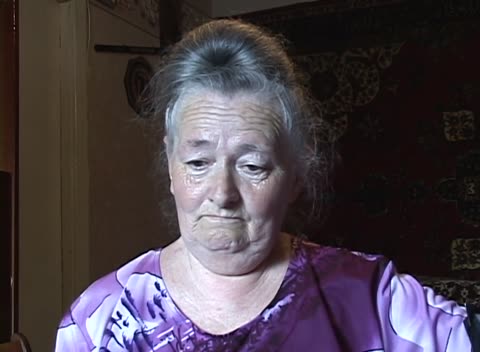
Loyf answers questions from the dialectological questionnaire. Lemster prompts, often with Russian words and sentences, and she gives her Yiddish equivalents or says she does not remember or has not heard them. Items include animals, colours, building and household words, adverbs of time and place, adjectives, and sentences to translate. Also covered are words for a convert, a person who marries out, a Jewish collective farm, and praying in the synagogue. Later items are words for an enemy, case and pronoun forms, and parts of a house. At times she remarks that people forget Yiddish and other languages.
The passage is not only questionnaire work: it includes short digressions on converts and intermarriage, on Jewish collective farms, and on prayer.
Loyf says there is little to tell and that no Jews live any more in a place whose name is unclear in the transcript. She says she does not travel to the graves of ancestors. She mentions that her grandmother Blime and a sister are buried here, and that she prays to God in Yiddish for health and peace in the world and for Israel. She says few Jews remain here or in the villages. Lemster thanks her at the close.
The transcript adds her grandmother and sister buried here, the lack of Jews, and the content of her prayers.