0:00
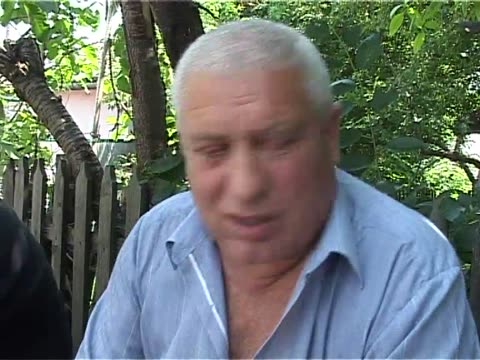
Yerikhman spoke Yiddish with his mother, but when she died in 1988, he had fewer people with whom to speak. His father (1913-1958) was a trader/merchant and fought in the war. In his own professional life, he worked almost entirely with Jews and spoke Yiddish at work, even with some of the non-Jews in Sharhorod. Yerikhman recalls Jewish religious services led by an old Jew in a private home where they kept a Torah Scroll and he was able to say Kaddish for his father. Yerikhman also remembers celebrating shabes (Sabbath) and eating traditional foods, such as yoykh (soup), gefilte fish and cholent. Yerikhman answers a series of dialectological and linguistic questions about the Yiddish language, during which he talks about the differences between the “accents” in his Yiddish and those of local Litvaks, who spoke differently. Yerikhman remarks that the Sharhorod cemetery, in addition to its two famous tsadikim (righteous men), is full of Romanian Jews who died from hunger and sickness, having been transported to the town during the war. The recording ends with Yerikhman expressing his political views about the current state of post-Soviet society, commenting on the differences between those who live in small towns and those who live in urban locales. He also talks about what he views as “Gorbachev’s mistake” in allowing emigration from the USSR, as too many Jews have left what was still a good life in Sharhorod.
Yerikhman talks about his parents. His father was a trader or dealer who went to the front, and his mother stayed at home with the children. After his father died in 1958 he went to an old man's small prayer room, said Kaddish for eleven months, and recalls the old man's Jewish books and a possible Torah scroll. He remembers Sabbath food (soup, fish, cholent) and then answers a long series of questions about Yiddish: Russian words to translate, greetings, words for non-Jews, a Litvak neighbor's accent, and the names of card games such as blandzh. He also speaks Yiddish with Jewish colleagues at work. Later he recalls his mother's brothers and sisters, some of whom are in Israel, the hunger of the war and 1947, his father's return, and his part in a Yiddish film made in Sharhorod. He mentions the cemetery with two tsadikim and Romanian Jewish deportees who died of hunger and disease. Near the end he turns to relatives in America and Israel, relations with neighbors, and Jews leaving for Germany.
The transcript adds his mother's siblings, the Yiddish film shot in Sharhorod, card-game names, relatives in America and Israel, and Jews leaving for Germany.