0:00
Interview
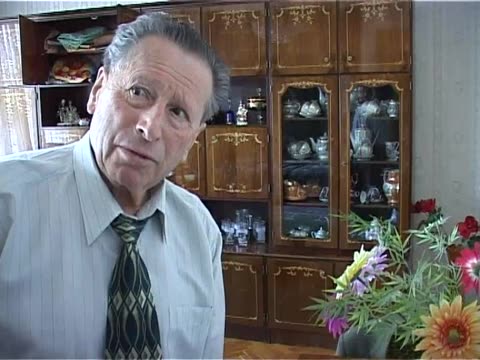
After greetings, Later shows Kerler photographs from his war service, including a German officer's interrogation and the liberation of Vienna. He gives his name and says he was born in Smotrych. He names his parents, grandparents and teachers, and says he directed the Yiddish school there. He describes his schooling: a Soviet Yiddish seven-year school, a Ukrainian ten-year school, and Moscow institute courses. He also describes the kheyder and rabbi, the two synagogues, local non-Jews, and the Yiddish amateur theatre circle he led. He recalls the expulsion of the Poles in 1936 and the 'golden night' when Jews were forced to give up gold. The remainder covers the closing of the big synagogue and his brother's death in the war, followed by holidays, Soviet anti-religious campaigns, red weddings, the Jewish court, performers and klezmer musicians, songs, and the Yiddish literature he studied. The recording breaks off during talk of the Yiddish press and the Kyiv Yiddish theatre.
Beyond the catalogue's list, the transcript shows the photographs, the 'golden night' of gold confiscation, klezmer and performers, and the literature taught at school.