0:00
Interview
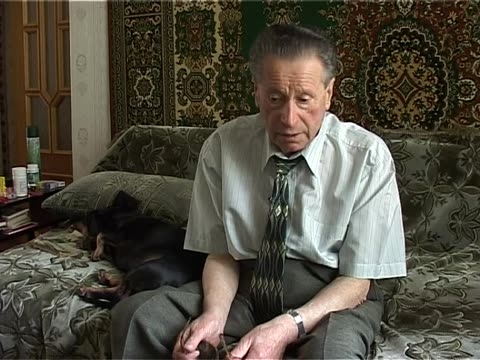
The passage begins with Later's postwar work as director of a large wholesale warehouse and chairman of a cooperative; he mentions a Yiddish journalist. He then tells his life story at Kerler's request: he went into the army in 1940, served at the front, and was twice wounded. He lists his many orders and medals, and mentions the extra pension he receives from the Ukrainian state. He names the places he passed through at the war's end, among them Warsaw, Germany, Vienna and Prague, and says he came on a camp soon after its liberation. He also says he came back to his home town on a short leave and found his mother, brother and other relatives had been killed. A Ukrainian friend of his had told him how this happened. He moved to Kam'yanets'-Podil's'kyy in 1955 and worked there until his eighties. From about 14:00 Kerler turns to a questionnaire on foods and words, and on how Yiddish was spoken in Later's home area. Items asked include gefilte fish and sweet or sour dishes, potato pancakes, words for devil, golem, thanks, please, mouse, house, wife and husband, and numbers. They also cover bodily words, colours and emotions, plurals, 'flowers', 'store', 'attic', 'beam', 'rich man', 'enemy', and the phrase 'to come back'. Later gives local forms and says which ones his own family used.
Beyond a bare interview label, the passage covers his army service, his family's fate, and an extended Yiddish questionnaire.