0:00
Town footage of Uman and Bershad'
From the machine transcript
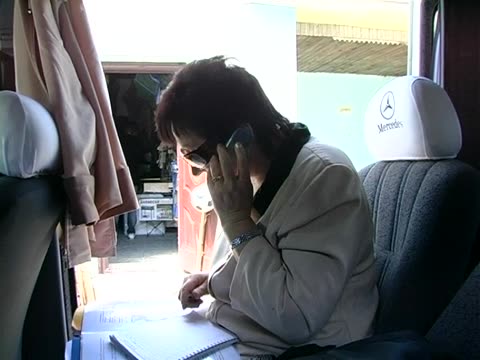
Footage from the van while the team drives through town and looks for street names and a market. They discuss directions in Russian, then phone to locate Efim Vigodner. They tell the person called that Kerler is a professor of Yiddish who collects interviews. They drive on toward a synagogue.
Shows phone calls to find Vigodner and the driving, not only town footage.