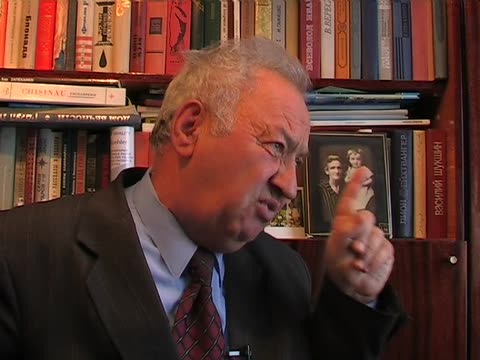
Gordin gives the size of his pension and of his mother-in-law's, compares their incomes and says they are small. He talks about German compensation, which ghetto survivors do not receive in Moldova, and about the Hesed and Joint food parcels and canteen for poor elderly Jews. He explains that he pays part of the cost, and that the Hesed could not transport his elderly mother-in-law.
Adds German compensation for ghetto survivors and the Hesed canteen and food parcels.
Gordin sends good wishes to Jews all over the world. He criticises the Iranian president's statements about Israel. He talks about Holocaust denial and hostile writing in Moldova and Romania, including a television discussion of a book. He says antisemitism is not felt in daily life, recalls his trip to Germany, and reflects on why many Jews did not flee early in the war.
Adds the Holocaust-denial book controversy, the Iranian president's statements and reflections on why Jews did not flee.
Gordin recites a short Yiddish poem he knows from childhood, about a grandmother and her grandchildren with apples and berries, and repeats it at Katz's request. He then recites a Hebrew poem built on repeated word pairs. He offers a school piece in Romanian or French but says he did not study Yiddish formally.
Katz thanks Gordin and wishes him well, bringing the formal interview to an end. The exchange is brief and partly unclear, with a remark about his mother-in-law.