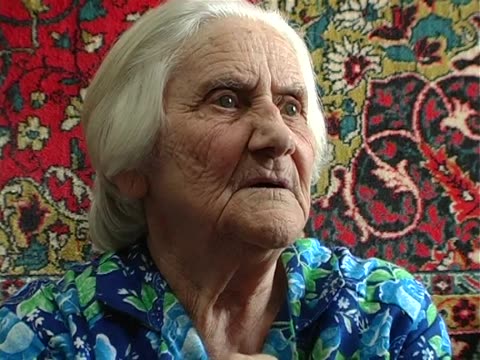
Khasidovich answers questions about the prewar period. She says her family managed with what they had and were not badly hungry. Asked whether Jews died of hunger, she says it was rare, perhaps two or three. She does not remember pogroms under the Soviets, though a pogrom around 1919–20 is mentioned. She says Jews in town were craftsmen such as shoemakers and tailors, builders and other specialists, and she is unsure whether any were militiamen. She is asked to explain a proverb about many trades and few blessings, and glosses it as everyone having his own work.
Adds questions on pogroms, Jewish occupations (shoemakers, tailors) and a proverb about trades.
Khasidovich speaks about the war years. She says some Jews hid because they feared being taken into the army, and that people hid from the Germans. Kerler and Lemster press her on who took her parents (the Germans) and who brought her food while she hid. She says many Jews of Fastiv perished and few remained. She says some people helped them, among them Jews who were with the Germans, and that bread was distributed in other ways. She mentions a family that did not hide and was lost.
Adds questions on who took her parents and who brought food, and the fate of Fastiv's Jews.