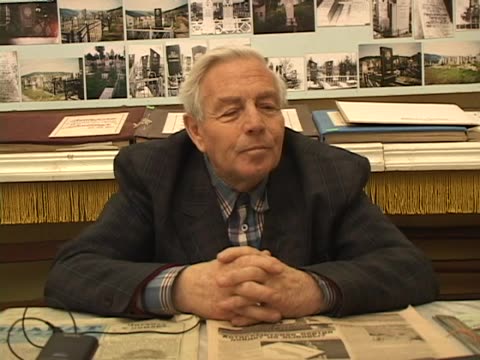
Kaplan answers Katz's questions about the meaning of words (dibbuk, golem). He speaks briefly about postwar hardship and the poor food of the 1940s, including cornmeal dishes. He explains the difference between a rav and a rebbe, and the Jewish burial place and mass grave. He mentions a man who died the same day, and recalls the prewar amateur Yiddish theater and Chabad Hasidim. He gives the town's Jewish population today as 360 (formerly fourteen thousand), with sixty-six children, and says emigration has stopped and a few people returned from America and Israel. From about 12:00 he is asked, with Russian prompts from a second speaker and questions from Katz and Lemster, for Yiddish equivalents. These cover greetings, thanks, luck, household and food words, body parts, adjectives, converts and Christians, peasants, directions and everyday sentences, with discussion of what is said in Mohyliv.
Also covers the burial customs, Chabad, the town's population today and the long questionnaire.