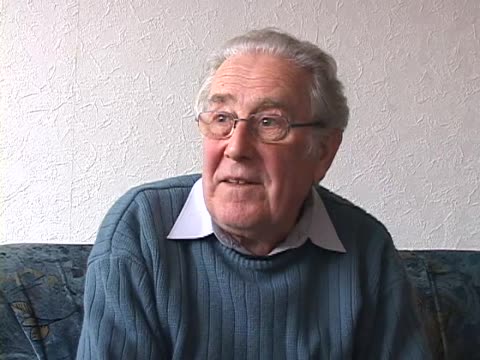
Rezmovits provides personal information and speaks about members of the contemporary local Yiddish club.
From the machine transcript
Rezmovit and Kerler first settle how his surname is spelled in English and Hungarian, and Rezmovit offers his email. He then talks about people who come to the local Yiddish club, among them a professor of anthropology and sociology of Lithuanian descent who knows no Yiddish, and a German woman and an artist from the Hebrew club who cannot speak Yiddish. He also mentions a young mathematician who brings material, and says that many of the older members have died.
Opens with the spelling of the name and an email exchange before turning to the club members.
Rezmovits sings a comical song portraying Hasidic life ("Oy di rebetsn") and then again the funny Zionist song. He also repeats his mother's way of speaking Yiddish.
From the machine transcript
At Kerler's request Rezmovit sings again a comic song about the rebbe and the rebbetsin, and the funny Zionist song about the attic and the halutsim. He then repeats a saying of his mother's, in her way of speaking Yiddish, about a curfew and the gendarmes. They discuss the origin of one word in it. He describes his mother's sense of humor and her stories.
Begins with the rebbe song and also includes a discussion of his mother's humor and the start of her bandit stories.
Rezmovits shares stories about "Froim der ganeydiker" (Froim the merciful), he learned from his mother. One story involves Froim going to a restaurant, pretending to be a wealthy man, and bilks. Another story deals with Froim visiting a priest and stealing from him.
From the machine transcript
Rezmovit tells stories his mother told about Froim the merciful, a trickster figure. In one he eats at a Jewish inn and escapes without paying by tying the landlady's eyes. In another he steals from a Catholic priest by getting the dogs drunk. Kerler asks about the word for the rising agent used in baking. Rezmovit then recalls his mother's patience and wisdom, and how in the deportation wagon she and other Jewish women dealt with pork fat packed in a bundle.
Also covers a baking term and the deportation wagon episode with his mother.
Rezmovits talks about his family, particularly his mother. Rezmovits then recalls songs about poverty, he learned from his mother.
From the machine transcript
Rezmovit continues about his mother's courage and what she told the Germans. He recalls a song of hers on not boasting when one has money, and says other poverty songs of hers exist. He mentions an American Yiddish songbook, in Yiddish transliteration with English text, that he received as a gift from the professor.
Rezmovits talks about his life during World War II, particularly singing German songs in the concentration camp and the Hungarian occupation.
From the machine transcript
Rezmovit answers Kerler's question about songs in the camp. He recalls fear of the Germans, German songs, and the Hitler Youth throwing snow and stones. He describes work for the elderly and an encounter with a Hungarian policeman who asked whether they were still alive, showing that others knew where the Jews were being taken. He says he felt hatred everywhere, though a few non-Jews were decent.
Centers on the camp, the Hungarian policeman and hatred rather than songs.
Rezmovits addresses his life in Israel and then Ukraine after the war. He mentions that his sister was imprisoned during the post-Soviet era.
From the machine transcript
Rezmovit talks about how well he felt in Israel and why he returned home to Hungary. His father was ill with cancer, and the three brothers could not decide who should go back to help their parents. He mentions a man named Friedman who called them returnees, and his sister Rivka, who was imprisoned. A photograph of his bearded father may have saved her, and she has since died.
The transcript places the return and the sister's imprisonment in connection with Israel and Hungary, not Ukraine.
Rezmovits speaks about prewar holiday celebration in Debrecen. He also recalls a Purim shpiel. Rezmovits then recalls songs from his childhood.
From the machine transcript
Answering Kerler, Rezmovit recalls Purim in the Orthodox community in Debrecen before the war: sending gifts, a rhyme, reading the megillah, and a school play about Joseph and his brothers, sung without instruments. He recalls Hebrew and Yiddish songs from childhood, among them a sad one and one about the messiah, and mentions his harmonica. Near the end the interviewers arrange the microphone and bring a drink.
Includes Hanukkah money and the arrangement of microphone and refreshments at the end.
Rezmovits speaks about his aliyah. According to him, he became less observant during that period. He then talks about prewar religious life, including the Hasidic community, in Debrecen.
Rezmovits shares an epsiode from army life in Israel. He then explains how he learned to play the harmonica from a gypsy boy in Debrecen.
From the machine transcript
Rezmovit recalls learning to play the harmonica at about age ten in Debrecen from a Gypsy boy of fifteen or sixteen who spoke Hungarian. He tells a joke about advice he gave the boy. He remarks that Jewish children, even under oppression, sought some joy.
The transcript does not show an Israeli army episode; the passage begins with the Gypsy boy.
Rezmovits discusses his childhood memories, particularly games. He then addresses the influence of Zionist organizations before and after the war, before speaking about languages of communication within his family.
From the machine transcript
Rezmovit recalls childhood games in the courtyard, including a stick game with barrel rings and one named for a ball made of stockings. He says Zionism reached the Jewish community only after the war and that his devout father then wanted to go to the Holy Land. He discusses writing letters to his children in Hungarian, since the daughters could not write Yiddish. He speaks of translating his mother's poem and of Hungarian-language poets, and mentions his wife's death.
Rezmovits talks about his family, specifically the period after his wife passed away. He then speaks about his father, who was a hasid of the Kaliver rebbe.
From the machine transcript
Rezmovit describes the period after his wife's death, when he was left with two sons and learned to cook and look after the house. Kerler then asks about his father before the war. His father was no Hasid, since his own father was a melamed, but he traveled to the Kaliver rebbe, and Rezmovit mentions a song linked to the Kaliver rebbe.
Begins with the widowhood and cooking, then asks about his father's Hasidic affiliation.
Rezmovits shares the legend how the Kaliver rebbe learned a song from a Christian shepherd. He then plays the melody of the Hasidic tune "Szól a kakas már" on the harmonica.
From the machine transcript
Rezmovit relates the legend that the Kaliver rebbe heard a song from a Christian shepherd and turned it into a Hebrew song, keeping the Hungarian words. Kerler establishes that the rebbe only heard it and did not buy it. Rezmovit tries to play or recall the Hungarian melody on the harmonica and sings, with Kerler, the Sabbath song his father sang. He then speaks of his father's piety and his remark that a Jew on a mountaintop must still be a Jew.
Also covers his father's Sabbath singing and his piety, beyond the harmonica melody.
Rezmovits talks about his military service in Israel, for which he was drafted in 1949 and served until 1951. He explains that he joined the army six days after his arrival. Rezmovits then shares episodes from warfare facing the Egyptian army.
From the machine transcript
Rezmovit describes his military service in Israel, with arrival in 1949, six days' leave and then basic training at a British-built base. He recounts serving in the south, including Eilat, the killing of an Arab, road patrols, a fight with the Jordanians and an incident in which a comrade lost a leg. He tells of a Passover when a driver offered him a lift and he refused to leave his unit, and of other incidents of the 1950–51 period.
The years given in the catalogue (1949–51) are confirmed only in part, as the dates are unclear in the transcript.