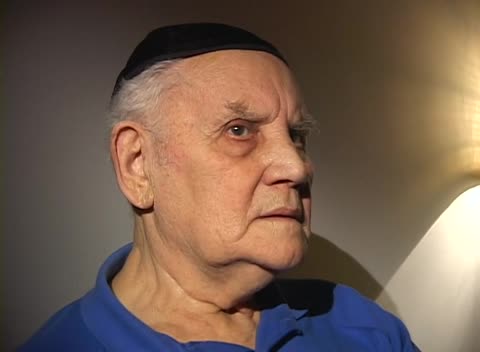
Kerler asks why Galambos moved between different yeshivas. Galambos says he himself decided to go, having heard about another yeshiva at home, and that a brother also studied in several. He and Kerler discuss how yeshiva study worked: study with a partner, lectures by the head of the yeshiva, the difference from the talmud torah, and the move from partner study to attending lectures.
Also covers his brother's studies, the choice of yeshiva, and the yeshiva versus the talmud torah.
Galambos describes prewar Jewish life in his village: some poor people, but most Jews worked, as farmers, tailors, shoemakers, carpenters and an innkeeper. Kerler asks about prayer shawls. Galambos says they were kept in the synagogue, and children carried theirs. Only the shochet wore one in the village, and he mentions boys' sidelocks.
Adds the shochet as the only man with a prayer shawl and sidelocks.
Galambos answers Kerler's questions about his mother's Sabbath and holiday clothing: a white kerchief on the High Holidays and another cloth head covering on ordinary Sabbaths, whose name is unclear. He then speaks of the large unheated synagogue and the beit midrash in winter, and the seasons when services were held. Kerler ends by asking him to sing.
Adds the synagogue in winter and the closing request to sing.