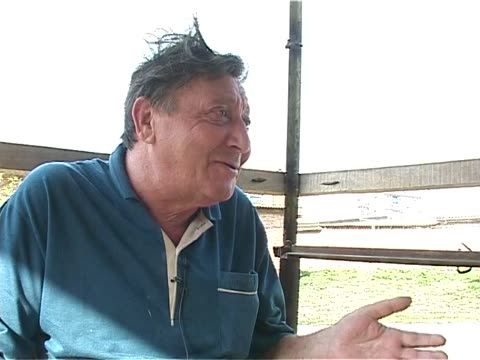
Shveibush, with a second man adding comments, talks about the village of Horyshkivka and its Jewish kolkhoz named after Stalin, where his mother was a team leader with six children. Kerler asks about Jewish holidays kept quietly in secret, about food such as gefilte fish, and about his father's amateur theatre. Much of the talk concerns the village as Sholem Aleichem's Kasrilevke, the Yiddish stage production of 'Tsigele', pigs on the kolkhoz, Simchat Torah customs and kerosene lighting; the passage ends with thanks and goodbyes.
Covers Sholem Aleichem and Kasrilevke, the Yiddish theatre, Simchat Torah customs and electricity, not just the kolkhoz and the occupation.
Vainer-Shpak gives personal information (born in Vinnytsya in 1921; the address of her prewar home) and names her family: her father Froyke, a Bratslav Hasid, her mother Dobtse from Pryluky, brothers, sisters and grandparents. She tells of her Jewish model school in Vinnytsya, her studies as a dental specialist and the assignment to a sugar factory village in 1940, then her journey toward Odessa on foot at the start of the war and her return, hiding and survival in Vinnytsya, with her husband. She also talks about her parents' religious life, Sabbath, Purim and Hanukkah food and customs, the synagogues of Vinnytsya, and a story about Haman and Esther.
Adds the long account of family names, the Uman villain story, Shavuot and Hanukkah foods, and the escape and hiding in Vinnytsya.