38:38
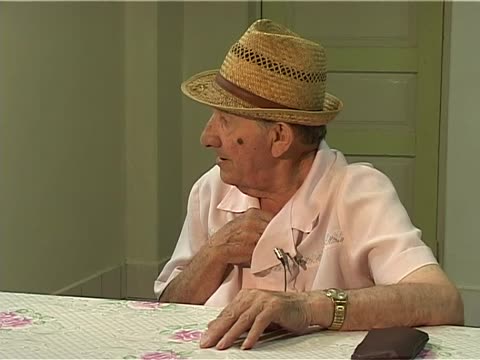
The next informal interview with Furman begins. He provides some details about his biography. He studied at a religious school (cheder) and then Yiddish school. Furman fought at the Stalingrad front and received several military awards. He returned to Berdychiv in 1945. Furman also mentions his family's fate during World War II. Furman's wife passed away in 1992 and he does not have any children.
Furman tells his biography. He did not go to cheder but began work as a carpenter at thirteen, was sent to the front in 1941, and fought at Stalingrad in a guards army. He returned to Berdychiv in 1945 without a leg and found none of his family, which had numbered seven. His wife died in 1992 and he has no children; he is 82. Asked by Kerler, he says he studied at a Yiddish school.
The transcript shows the return in 1945 to find no family, and the school-name question at the end.