Recordings › Chișinău

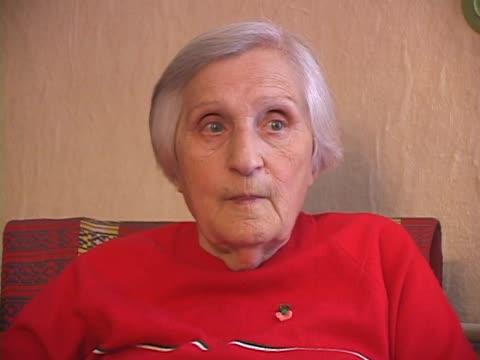
MDV 175 · Pava Naftulevna Rotner

Chișinău, Moldova 3 June 2006 Interviewed by Dov-Ber Kerler, Moisei Lemster Part 2 of 2 52 min · 4 passages

One conversation with Pava Naftulevna Rotner, continuing over MDV 174, MDV 175.

Loading the player…
Passages

0:00

Rotner addresses Yiddish dialects and answers questions about cultural terminology. Rotner also mentions her family.

From the machine transcript

Rotner says she speaks Yiddish as it was spoken in Bessarabia and comments that others now speak it differently. The speakers discuss Lithuanian (Litvak) and Galician Yiddish. She mentions that in recent years she has had no one to speak Yiddish with, and that she speaks Russian and Moldovan with a daughter who studied in Moscow. She says she is not ashamed of being Jewish. Kerler then introduces the word questions.

Discussion of Litvak and Galician Yiddish and her own limited use of Yiddish today.

3:13

Rotner answers dialectological questions from the AHEYM Yiddish linguistic questionnaire.

Questionnaire Yiddish language and dialect · MCO
From the machine transcript

Questionnaire work: Rotner is asked how certain words and phrases are said in Yiddish, including forms of politeness and thanks, luck, and entering the house. Kerler and Lemster prompt with Russian words and she often cannot recall the Yiddish equivalent. She discusses which forms sounded more homey in the village.

7:54

Rotner shares her mother's recipe for gefilte fish. She then continues to answer dialectological questions from the AHEYM Yiddish linguistic questionnaire. She also addresses her family's life before the war (28:00).

From the machine transcript

Rotner describes how her mother made gefilte fish rather than chopped fish, using a knife and later a grinder, with the skin removed. The questionnaire continues with words for animals, colors, building a house, weather, distance, time, illness, piety, the street, the river, potatoes, flowers, and the home. Kerler and Lemster also ask about non-Jews who worked for Jews on the Sabbath, the Jewish New Year versus the Christian one, midwives, kinship terms, the prayer leader's lectern, the afterlife, and a game with dice. She says the session made her recall Yiddish she had not used for many years, and that she speaks Russian with her children.

Includes talk of a Sabbath goy and a woman who lit the stove, Christmas and New Year terms, the afterlife, and her children's languages.

51:47

The team concludes the interview with Rotner.

· MCO
From the machine transcript

The interview closes: Rotner says that is enough and Kerler agrees that enough has been said.