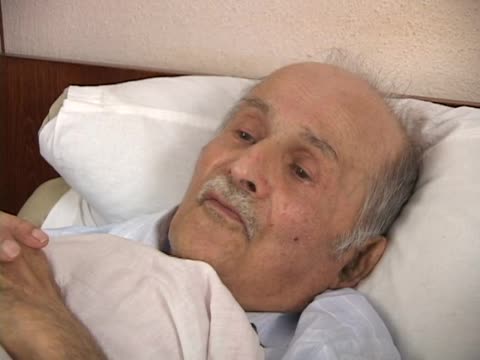
This tape is a continuation of a formal interview with Aron (Urn) Kalmanovich Biter (b. 1918 in Popel’niki). He discusses his education and shares his knowledge of Latin and Polish.
Biter answers questions about his schooling. He was the only Jew at the lyceum, while many Jews attended the Polish gymnasium in Snyatyn, where he studied German, French and Latin. He recites a list of Latin words and tries a few Polish phrases about the gymnasium and its director; Kerler asks him to recite Polish poetry.
The Latin word list, the Polish phrases and the question about poetry.
Biter shares his father’s stories of military service during the First World War. He also talks about Jewish religious life in his childhood home, detailing Sabbath and holiday observances and food customs.
Biter speaks briefly about Franz Joseph and the Jewish attitude toward him, and about the one remaining Jew in Snyatyn today. Asked about his parents' home, he describes Sabbath and Passover customs and foods, then Purim masks, the Hanukkah dreidel, Sukkot, latkes and doughnuts, learning tefillin in cheder, and his later gymnasium years away from prayer. Kerler and Katz then explain to the household that they are collecting Yiddish folklore and dialect material for American and Lithuanian universities.
Includes talk of the Snyatyn Jew, the Hanukkah and Purim customs, and the explanation of the project to the household.
Biter explains the nature of local anti-Semitism, noting that it has been prevalent at times, but the situation has always been better than in Lithuania. Biter notes that there were many Zionist youth groups in the towns where he lived, but that he was not active in any of them. He was somewhat active, however, in Jewish agricultural organizations, one of which, he recalls, had a school in Kolomyya supported by funds from Baron de Hirsch.
Biter compares local antisemitism with that in Lithuania, which he knew from time spent in Norilsk (?). Asked about Jewish–non-Jewish relations and Zionism, he says he had no contact with the Zionist groups but took an interest in the Jewish agricultural committee in L'viv and its journal. He recalls a Jewish agricultural school near Kolomyya funded by Baron Hirsch, which was destroyed by Ukrainian bandits.
Adds the comparison with Lithuania and the postwar-era mention of Norilsk (?).
Biter describes his return to his village in the postwar period, noting that with the exception of a small number of former ultra-nationalists, he had generally good relations with his neighbors.
Biter says that after his return in the 1950s relations with neighbors were generally good. Only some ultra-nationalists tried to make trouble for him, especially in the kolkhoz meetings, where they made hostile remarks about Jews. Katz then turns to September 1939.
Biter details the social, political and economic changes that occurred in 1939 when the Soviets annexed his village. He notes that the ethnic Poles were mostly displeased with these changes, while the Jews welcomed the new regime as the old government’s nationalist policies were overturned. He then tells a story of a Jewish millionaire from Snyatyn who left the country during this period for Romania and the consequences this had for his family members who stayed behind.
Biter describes the Polish nationalist policies before 1939 and the arrival of the Soviets in September 1939. Jews were pleased, Poles were not and Ukrainians were divided. He recalls Soviet soldiers buying up goods in the shops and the abolition of letters in the alphabet. He tells of a Snyatyn millionaire named Birnbaum who fled to Romania, after which his family was deported to Kyiv.
Adds the Soviet soldiers' shopping, the language reform and the Birnbaum family's deportation and later fate.
Biter recalls the first days of the German–Soviet war in June 1941: he had just finished technical school and was assigned to work in the Horodenka district. Hungarian troops then came, followed by the Germans, and Jews were the first targets. He describes crowded ghetto housing, scant food, and the period of the ghetto as lasting from August 1941 to September 1942. He mentions German compensation.
Adds the arrival of Hungarian troops before the Germans and the details of ghetto housing and food.
Biter states that as a Jewish survivor, he now receives financial compensation from Germany. He also talks about the contemporary economic situation in Ukraine, his children’s economic conditions in L’viv and Israel, and describes some of his medical problems.
Biter says he gets German compensation as a Jewish survivor, paid since 2004 at a modest monthly rate. He describes today's economic difficulties in Ukraine, his son in L'viv, a docent on a small salary, and his daughter in Israel. He mentions his illness and expresses views on American help and Ukraine's prospects.
Adds his health and his views on American help for Ukraine.
Professor Katz shares information about himself and the AHEYM project with Biter. Biter gives the research team a few copies of his memoirs in Ukrainian.
Kerler asks to film Biter's memoir, and Katz tells him about himself and the American-funded expedition to preserve Yiddish folklore, giving him a business card and offering to help get medicines. Biter has a few copies of his book, which are discussed in a mix of Yiddish and Russian.
Adds the discussion of copies of the book and Katz's offer of help.
The camera briefly cuts to exterior shots, then quickly back inside where Biter autographs his book for the researchers. The camera pans around the interviewee’s home, focusing on the home decorative cookware, warming stove and Christian religious objects.
The team says farewell, with thanks, wishes for health, an exchange of addresses and talk of the book copies. The transcript shows nothing of the exterior shots or the pan around the home, apart from brief remarks about the home's furnishings.
The transcript shows farewells but not the camera movements.
The camera cuts to the research team setting up an interview at the home of David Abramovich Vider (b. 1922 in Sighetu Marmatiei) and his wife in Kolomyya.