0:00
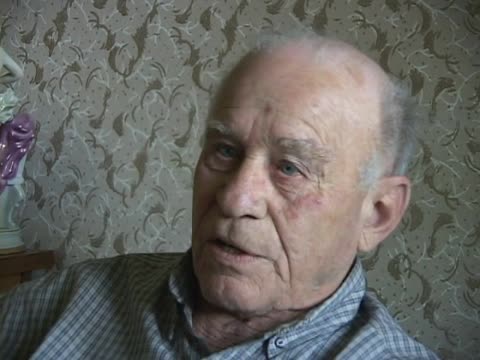
Vider talks about his family and prewar Jewish life. Vider’s daughter lives in Hungary and his son is a Canadian citizen. His father was born in Sighetu Marma?iei. Vider recalls the wedding of Eluzer Spira’s daughter in 1934, as well as the rebbe’s funeral. He then talks about religious life today, praying in Russian. According to Vider, people called prewar Mukacheve “little Jerusalem.” He claims that even half of the non-Jews in the city spoke Yiddish. Vider explains that the former director of the local Hebrew school, Dr. Haim Kugel, became the mayor of Kholoniv after the war.
Vider talks about attending the setting of a new gravestone for a Jew in Berehove, and about the last Yiddish speakers there. Kerler introduces him as born in Mukacheve in 1922. He gives his father's and grandfather's names, with a father from Sighet, and discusses the Vider family name, the town's Jewish population (about sixteen thousand), and a Kleinbart family. He remembers the wedding of the rebbe's daughter and mentions the rebbe's funeral. He describes the town's many synagogues, prayer today in Russian with only a few praying in Hebrew, and bar mitzvah and bat mitzvah customs. He recalls Mukacheve as a 'little Jerusalem' with a multiethnic population where Hungarian was the main language and half of the non-Jews knew Yiddish, plus the Hebrew gymnasium under Dr. Haim Kugel, the orphanage, and the Munkács Hasidic court. He ends with his children (a daughter in Hungary and a son with Canadian citizenship) and a short Yiddish-Russian exchange about a word.
The transcript also shows the Kleinbart family, bar/bat mitzvah customs, charity boxes and the Hasidic court.