0:00
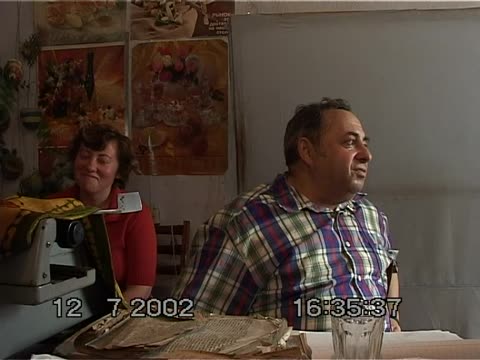
Continuation of interview with Abram (Arkadii, Abrashe) Khaimovich Vaisman, born 1940 in Sharhorod. (Part 2 of 4. See MDV 655, MDV 656, and Accession # 09-010.58-F MDV 776) His father, named Khayem was also born in Sharhorod, and, having lost his right hand, did not work. His grandmother owned a store. Vaisman is named for his grandfather Avrum. His mother Blume was born in Chernivtsi (Kleyn Tshernovits), a shtetl 15km away and worked as a seamstress. Vaisman has three siblings: Roza (b. 1923), Danya (b. 1929) and Kolmen (b. 1936), the third of whom now lives in Israel. Although Vaisman is now retired, he worked for the local newspaper as a photographer/photo-journalist, a craft he learned from his brother Danya and loved to do. Vaisman remembers Jewish religious holidays and how his father used to pray in shul (synagogue). Although he has been told that there were eight synagogues in the town before the war, he remembers only one shul, which was burned down after the war 40-45 years ago. Vaisman went to Ukrainian schools growing up and learned some English, but he cannot read or write in Yiddish. Vaisman describes his town as a Jewish city until emigration and shows old photos he took of the town’s elderly Jews, most of whom have since left for America or Israel. In Sharhorod, according to Vaisman, there were all kinds of Jews in the town, both religious and non-religious. He also tells the interviewers about the two tsadikim (righteous men) buried in Sharhorod’s cemetery who have been popularly credited with the fact that no Jews were killed when the Germans came to the town (Vaisman adds that some Jews also bought their way out of danger). Unlike other shtetlekh (towns) in the area where all the Jews were killed, in Sharhorod the Romanians killed no Jews.
After informal talk about water and arrangements, Vaisman gives personal data at Katz's request: the town's Yiddish name, his address, postal index and telephone, his name and nickname, and his birth in Sharhorod in 1940. He was named for his grandfather Avrum. His father Khayem, born in Sharhorod, lost his right hand and was on a disability pension, and his grandmother had a clothing shop. His mother Blume was born in Kleyn Tshernovits and was a seamstress. He names his sister Roza (b. 1923, deceased), brother Danya (b. 1929, deceased) and Kolmen (b. 1936, in Israel). He describes his work as a photographer and photo-correspondent for the local paper, learned from his brother. He then remembers his father at synagogue and the single synagogue he knew, which was burned down; others say there were eight before the war. He cannot read Yiddish and attended Ukrainian school. He recounts emigration from the town to Israel and America and anecdotes about shopping in Romania and Poland. He names older Jews such as a cantor, a shokhet, a hatter and a felt-seller. He looks at his old photographs, says Sharhorod was a Jewish town and is no longer, and describes the Jews as pious and non-pious. He closes with the two tsadikim and the belief that no Jews were killed under the Germans and Romanians, plus a story about money collected from townspeople.
Adds Vaisman's photo-journalist career, the old photographs he shows, anecdotes of emigrants, and a legend about the town paying off the Germans.