0:00
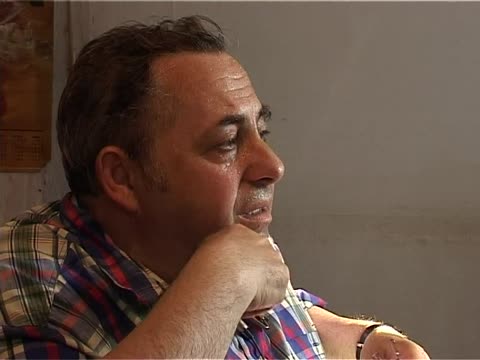
In this part of the interview, Vaisman discusses the ghetto set up in Sharhorod during the war. His sister used to credit Ukrainians with helping the Jews, as one woman in particular helped his family by bringing them food and other supplies, but he himself does not remember the war. When the Romanians came to Sharhorod, Vaisman relates, they did not kill any Jews. Rather, the Romanians brought their own Jews to the town, thousands of whom died of hunger and were subsequently buried in the Sharhorod Jewish cemetery. Vaisman also tells a Hershele Ostropolyer story, and shares his memories of Passover, when his mother would bake matzo kugels and bagels. He relates how one bakery would receive official permission to bake matzos for the whole town. Vaisman answers a series of dialectological and linguistic questions on the Yiddish language. Vaisman’s daughter, Klava, shows photos of her Jewish childhood friends who spoke Yiddish, most of whom have now emigrated. Vaisman also shares his opinions about the contemporary state of Yiddish and life in Israel.
Vaisman says there was a ghetto in Sharhorod and recounts his sister's belief that Ukrainians helped the Jews. He names a Ukrainian woman, Ksenia Vasilovna Loyanich (spelling uncertain), who brought his family food and whom he wants recognised. He says he does not remember the war, and that the Romanians did not kill Jews in Sharhorod but brought their own Jews, thousands of whom starved and were buried in the local cemetery. He tells a Hershele Ostropolyer story about a poor guest at a Sabbath meal. He recalls the Passover seder, with his mother's matzo bagels and kugels and the bakery that needed official permission to bake matzo, and also Hanukkah, Purim and the Ninth of Av. Katz and Kerler ask many dialect questions on bird names (a dove, a small bird), the colour of the sky, words for ugly face, back, house, 'almost', Lithuanian Jews and converts to Christianity, the town as shtetl, and the word for life. Vaisman also recounts the case of a local Jewish man who converted. In the last part the daughter shows an album of Jewish childhood friends who spoke Yiddish and have mostly emigrated to Israel, America and Moscow. The talk turns to Yiddish and Jewish life in America and Israel, Vaisman's brother in Israel, and his father's relatives, who were killed during the war.
Katz and Kerler's dialect questions on word forms and the Hanukkah and Purim recollections, plus the Hershele story, the wartime ghetto, the Passover memories and the photo album are all present as the catalogue says; the transcript also adds a convert anecdote and talk of Vaisman's relatives killed in Yaruga (?).