People › Rita Davidovna Shveibish › conversation

Rita Davidovna Shveibish

Tul'chyn 8 January 2009 Interviewed by Dov-Ber Kerler, Jeffrey Veidlinger 25 min · 1 part on 1 tape proposed
Loading the player…
  1. MDV 725 0:00–25:02 · 25 min · not online — MCO · a part of the tape
Passages

0:00

The team arrives at Shveibish's apartment and sets up the interview with her, as well as her husband.

Informal MDV 725 · MCO
From the machine transcript

Arrival at Shveibish's apartment. Kerler asks for the street and greets the household in Russian and Yiddish; talk turns to vitamins brought as a gift and to a man named Solomon in Bershad' (?).

0:59

The formal interview with Shveibish begins. She speaks about her life today, as well as local community life.

From the machine transcript

The interview with Shveibish begins. After exchanges about the gift of vitamins and the cold winter, Kerler asks what is happening in the community. She replies that the community is shrinking and that people are dying, and mentions deaths of local Jews, including a man named Mishe Shvartsman (?) who had been in Pechera.

Names deceased local Jews and the vitamin gift.

3:52

Shveibish speaks about organizing visits for high school students to the Pechera concentration camp. She also addresses commemoration and the difficulty to access the killing site, where Jews from surrounding towns were killed. Shveibish then talks about life today.

From the machine transcript

Shveibish talks about arranging visits by schoolchildren to the Pechera camp and the difficult, closed-off road to the site. About sixty-two thousand Jews, from Tul'chyn and elsewhere, are said to be buried there, some brought from Bukovina, Bessarabia and Romania. She discusses commemoration and the effort to keep the place up, then turns to the cold, travel plans and the economic crisis.

Gives the numbers and origins of those buried at Pechera and the access problems.
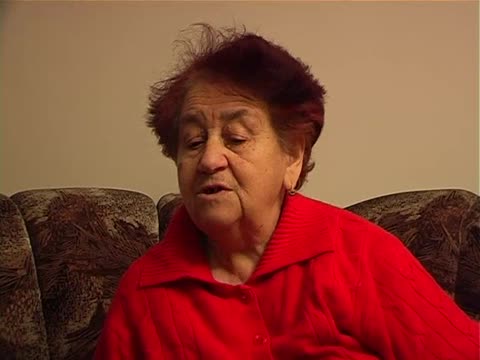
10:31

Shveibish addresses contemporary Jewish life in Tulchyn, including communal support, as well as from abroad for holiday celebration. She also describes her communal work.

From the machine transcript

Shveibish addresses today's Jewish community in Tul'chyn. She says there are few fully Jewish families, perhaps twenty or thirty, and describes help from Hesed, former food aid, and care for elderly people living alone. She also speaks of money and gifts, such as vitamins and Hanukkah candles, sent by a woman in America, and of her own community work.

Includes help from abroad and the remaining families.

17:02

Shveibish briefly talks about her life in the Pechera concentration camp. She then addresses contemporary Jewish life in the region, including antisemitic incidents. Shveibish maintains that the numbers of the Jewish population is dwindling. Shveibish provides information on Tulchyn Jewish residents.

From the machine transcript

Shveibish says Yiddish was the only language in Pechera and that some non-Jews still speak Yiddish. She discusses the dwindling Jewish population and the antisemitic remarks heard at the market. She tells of rescuers' children who need help, of local Jews and of Jewish returnees from Israel, and she and Kerler speak about the holidays and the Ashkenazi pronunciation of Shavuot. The interview ends with talk of arranging further visits.

Adds the Shavuot pronunciation exchange and the antisemitism at the market.