0:00
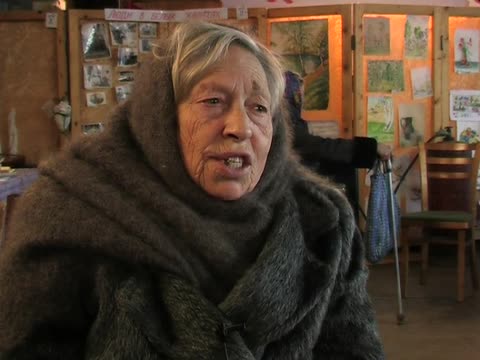
Mirenburg talks about her life during the war. After she and her family returned home to Sguritzy, Mirenburg explains, how they were supposed to go the Rîbniţa ghetto, but went to Yampil instead. She recalls a family friend, who was injured. When they arrived in Yampil, Mirenburg's family moved further through different Ukrainian towns, including Myskivye 2:27, Dzyhivka, and Potashna. She describes the journey and how they received food from Jewish families. Mirenburg talks about their stay on the Potashna kolkhoz and the time she fell ill with typhus. Her younger brother died of typhus there. She then recalls what people on the kolkhoz told about the Bershad ghetto, which encouraged her family to move on to the Bershad ghetto. She also lost her youngest brother and father during the war. Mirenburg talks about how she begged for food in the surrounding villages for two weeks and the beatings she and her mother suffered. She then addresses life in the Bershad ghetto and her family. Mirenburg recalls a song non-Jewish boys in the surrounding villages would sing.
Mirenburg continues her war account. Her group was sent to Yampil instead of Rîbniţa, and she tells of a family friend from Sguritzy who survived a massacre of a column. Then come the march through Ukrainian towns, food rations, and the Potashna cowshed, where she fell ill with typhus and had a dream while ill. Her brother and then her father died. In Bershad the family begged in the villages, and a Ukrainian village elder beat her and her mother. She also tells of a boy who was tied to a motorcycle. Kerler asks about a song the village boys sang.
Adds the typhus dream, the boy tied to a motorcycle, and the father's death date.