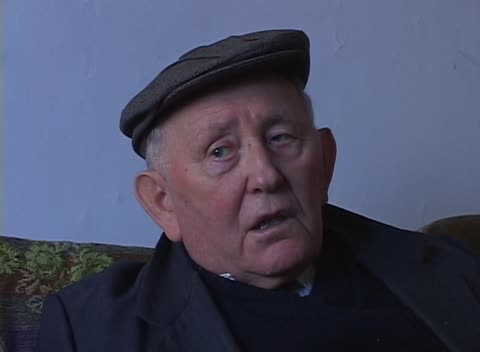
Reti provides personal information.
From the machine transcript
Opening of the interview: Kerler gives the date and place and asks the interviewee's name. He gives his family name, says he was born in Rohod and that his Hungarian name is Réti Béla. Kerler also asks where he lives now (unclear).
Reti provides personal information and addresses his yeshiva education in the village Nyírmada with Rabbi Yankl Yosef Halevi Yungrays.
From the machine transcript
Reti confirms his name Borukh, his birth in 1924, and that he studied in yeshivas before the war. He names a yeshiva in Balkány with a rabbi who was a great scholar (name garbled) and a village yeshiva near Rohod, Nyírmada, with Rabbi Yankl Yosef Halevi Yungrays. Kerler then asks about his father.
gives his birth year and names a second yeshiva in Balkány
Reti speaks about his family. His father built a prayer house and mikvah in Rohod and taught. Reti recalls how he studied with his father in the mornings before the war. His father was also born in Rohod and owned animals.
From the machine transcript
Reti speaks about his father Mordkhe Roze and his mother Perl. His father was a wealthy landowner and great scholar, not a strictly Hasidic-dressing Jew. He had his own prayer house and mikvah in the courtyard, rose before dawn to study, and learned Mishnah and Gemara with others. Reti studied with him in the mornings and names relatives who studied there. He also mentions his brothers, one of whom died in 1984, and that his father earned his living from his own fields, horses, sheep and servants.
adds his mother's name, brothers and the father's livelihood from fields and animals
Reti describes his childhood home and remembers the annual visits from the Kosoner rebbe and his court of 400 or 500 hasidim from what was then called Mezőkaszony in today's Ukraine (Koson). He then talks about the Sabbath celebrations with the Kosoner rebbe.
From the machine transcript
Reti describes the long family house and the Kosoner hasidim in Rohod, who gathered each year for one Sabbath around their rebbe, Rabbi Yisroel. He says several hundred Jews came to the courtyard, slept on straw, and that the rebbe blessed him and received petitions and money through his gabbai.
adds the large number of hasidim, the straw beds and the petitions to the rebbe
Reti talks about the the Kosoner rebbe's brother Mendele from Nagykálló, which was the birth place of the Kaliv Hasidic dynasty. Reti maintains that Mendele would visit Rohod several times during the year. He then sings the Hungarian Hasidic tune "Szól a kakas már."
From the machine transcript
Reti speaks about the Kosoner rebbe's brother Mendele of Kalev (Nagykálló), who had a beautiful voice and came to Rohod each year. He sings a Hungarian folk melody ("Szól a kakas már") that he says comes from the Kalever tradition. He mentions that Hasidic pilgrims still come from Hungary, America, Israel, Canada and Belgium, and Kerler asks about miracle stories.
Reti refers to the Kosoner rebbe's judgment and how people relied on it.
From the machine transcript
Reti tells of the Kosoner rebbe's foresight and judgment. The rebbe predicted that a man held by the authorities would be freed by a court, and it happened; this was in Kleinwardein (Kisvárda). Visitors, including non-Jews, relied on him, as he knew why they came. Reti again mentions the brother, Mendele of Kalev, as a small rebbe with a fine voice.
adds the story of the rebbe predicting the outcome of a trial and the brother Mendele
Reti sings Hasidic songs, including "ha'bait beshamayim."
From the machine transcript
Reti sings a Hasidic plea song, to heaven for mercy for the Jews (pre-war), several times, and Kerler asks him to repeat it more slowly. He says it was sung only before the war, in the synagogue after prayers.
Reti talks about his family. He grew up with five brothers and three sisters.
From the machine transcript
Reti speaks about his family: his mother Perl, who worked at home, and the nine children, six brothers and three sisters, whom he names with Kerler (the eldest Khaym Menakhem, then Ester, Sheyndl, Rivke (?), Shloyme Yoysef, Aron Yoytz, Yisroel and himself). He says that Yiddish was spoken only at home, while the non-Jews spoke their own language.
gives the names of the siblings and the language spoken at home
Reti speaks about prewar life in Rohod. He recalls non-Jews who spoke Yiddish. According to him, twenty Jewish families lived there. Reti speaks about his father's observance as Kosoner hasid and the Kosoner rebbe. Reti then talks about his family today.
From the machine transcript
Reti recalls that the village's non-Jews could speak Yiddish and that only about twenty Jewish families lived in Rohod, mostly with many children. He mentions his brothers, all learned, and his father as a Kosoner hasid whose home hosted the rebbe, including the divan the rebbe slept on. He says that he later travelled to Debrecen to have psalms said for the rebbe's memory. He talks about his brother Shloyme Yoysef, who is now seriously ill, and answers Kerler's terminology questions about a word for non-Jews and a word for a Torah scroll. He recalls the Torah scrolls of the village being made into shoes.
adds the brother's illness today and the question about words for Torah scroll and non-Jews
Reti speaks about his yeshiva education, when he studied with Volf Günsner for four years. He then recalls a prayer, Günsner would chant.
From the machine transcript
Reti says he studied for four years with Wolf Günsner, a great scholar, and recalls a long half-hour prayer Günsner would chant. Kerler tries to recall a related song and asks about it, but the transcript is unclear.
Reti sings the Hanukkah song "Ma'Oz Tzur." He then sings a Hungarian song about the time when the messiah comes.
From the machine transcript
On Hanukkah Reti sings the Hanukkah hymn "Ma'oz Tsur" and says there were no Yiddish songs. Kerler then asks for a Hungarian song, and Reti sings one about the end of exile and the messiah's coming, with a feast of wild ox. Reti does not recall a Yiddish version.
Reti sings the beginnings of a Passover song and speaks about prewar Passover celebrations, including food customs.
From the machine transcript
Reti begins a Passover song and does not recall "Khad gadyo" being sung. He says that as the youngest he asked the four questions, and discusses Passover customs: his father's hasidic avoidance of stuffed goose, avoidance of matzo flour in dishes, krimpl (?) dumplings, and the matzo baked under special supervision. The "mitzve matzos" baked on the eve of Passover were given to the poor or the community.
Reti speaks about Shavuot food customs and Purim celebrations before the war. He recalls singing and dancing on the street and recites parts of the Yosef shpiel. Reti maintains that his brother played Yosef. He then addresses Purim shpiels in Rohod, where boys from the neighboring villages Vaja and Nyírmada (Yiddish: Made) would join in.
From the machine transcript
Reti speaks about Shavuot and Purim. For Shavuot they ate dairy foods such as cheese dumplings. On Purim, Jews sang and danced in the street, and there was the Yosef play. He recites passages from it, says his brother played Yosef, and that the young men from Rohod, Nyírmada and Vaja performed it for two hours; only boys acted, and local non-Jews attended without understanding. He also mentions his studies in Balkány and the Lichtenstein tallis factory.
adds the Balkány rabbi and tallis factory and the Yiddish names of the neighbouring villages
Reti speaks about Jewish life in Nyírmada and the local rabbinical authority.
From the machine transcript
Reti speaks about Nyírmada, a larger village than Rohod, where the rabbi lived and travelled to nearby villages. This was Rabbi Yankl Yosef Yungrays, from a family of rabbis. He says that the rabbi's family of twelve was sent to Auschwitz and killed together in the crematorium, and about the selection to left and right at Auschwitz.
adds the rabbi's family being killed at Auschwitz
Reti speaks about his life during World War II. He speaks about forced labor pre-1944 and the deportation in 1944. He then speaks about his life in Mauthausen, as well as a death march from Melk to Ebensee, Austria, which lasted for two weeks according Reti. He then talks about his family's fate during the war.
From the machine transcript
Reti speaks about the war: the 1944 deportation from Rohod and forced labor on the front. He describes his arrival in Auschwitz and the burning of people, then Mauthausen and Melk, from which he was taken on a two-week march of about two hundred kilometres to Ebensee, naked and hungry. He then tells of his brothers, held in Auschwitz and working in a household of Mengele (?), and one at the stables.
adds his brothers' fates and the death march
Reti recites a Purim shpiel. He then speaks about traditional weddings before the warm, as well as musical performances.
From the machine transcript
Kerler asks for a story about a rebbe or wonder-worker; Reti recalls none. He recites again part of the Purim Yosef play, then Kerler asks about weddings. Reti says there was a feast and music after the chuppah, played by Gypsy musicians ("shkhorim"). He says the word "klezmer" was not used in his village, only "muzik".
adds the recitation of the play, the wedding and the Gypsy musicians
Reti speaks about prewar Jewish life in Rohod. He recalls how he played nuts during Sukkot and addresses holiday celebration, including food customs.
From the machine transcript
Answering Kerler, Reti says there were no Munkacs Hasidim in his area and that the Jews took no part in politics. He recalls the beit midrash in the courtyard as the meeting place, playing nuts at Sukkot, and every Jewish house having a sukkah, where his father slept. Kerler also asks about Yom Kippur night in the beit midrash on straw, the women's section, taking challah, and the salting of meat after slaughter.
adds Munkacs Hasidim, the beit midrash and the salting of meat
Reti addresses folk customs, including birth customs, and his family.
From the machine transcript
Kerler asks about the evil eye, and about the entertainer at weddings, and Reti is unsure of the term. Reti says his grandfather died before he was born and that his brother is named after him; the grandfather was a learned man. The talk turns to the women who helped at births and the small Sabbath loaves given to children visiting after a boy's birth (barkhes, which Kerler compares with challah), then to other expressions and a yahrzeit blessing.
adds the weddings entertainer, the grandfather and the term for the Sabbath loaf
Reti recites a prayer for yahrzeit. He then addresses birth customs. He then talks about contemporary Jewish life. Reti moved to Debrecen ten years ago.
From the machine transcript
Reti recites a prayer connected with yahrzeit, repeated more slowly at Kerler's request. He then returns to birth customs: during the week before a boy's circumcision children came in the evening to read the Shema (krishme), and this stopped after the circumcision. Reti says he has lived in Debrecen for ten years, that there has been only one circumcision and one wedding here in that time, and that almost all marriages are mixed. He describes Debrecen's former Jewish community of about twelve thousand, half deported to Auschwitz and half to Austria, and its synagogues.
adds the Debrecen community's size and wartime fate
Reti answers questions about cultural terminology. He then recites a prayer.
From the machine transcript
Kerler asks what a 'good Jew' means, and Reti answers that it means a kosher, observant Jew, and that there are few such people now. Kerler notes that Hasidic rebbes were called tsadikim. Reti gives a saying that where the tsadik is present there is light and glory, and where he is absent there is neither.
Reti addresses food custom, in particular gefilte fish. He recalls the "fish yid" who sold fish every week in the surrounding villages.
From the machine transcript
Reti recalls a fish-seller, the 'fish Jew', who brought fish from Debrecen every week on his back to the villages; Reti's Hasidic father bought fish for the Sabbath. Kerler asks how it was prepared: Reti describes cold boiled fish and the stuffed fish made from the skin, using a Hungarian name for it, and says he dislikes the sweet Israeli version, which he calls Polish. They go on to the terms for Polish and Lithuanian Jews, whom Reti regards as very pious people.
adds the terms for Polish and Lithuanian Jews
Reti speaks about prewar religious life in the region. He then explains how his father's mikvah was heated, by the "hoyf-goy." He also mentions peaceful relations between Jews and non-Jews.
From the machine transcript
Reti says the village had one Orthodox synagogue plus the rebbe's own beit midrash, and that every village had a brick synagogue. He explains how the mikvah was heated with a samovar and wood, hot on Thursday and Friday, with the water changed on Sunday morning. Kerler asks about the Sabbath goy; Reti says Jews did not work on the Sabbath, but a courtyard non-Jew, called the 'hoyf-goy', did the heating and other chores. He adds that relations with the non-Jews were good and there were no quarrels.
adds the synagogue buildings and the Sabbath goy
Reti sings a Sabbath song and addresses holiday celebration, including Sukkot (Hoshana Rabbah).
From the machine transcript
Kerler asks about Sabbath songs (zmires), and Reti sings parts of Sabbath songs; the words are not clear in the transcript. Kerler then asks about Hoshana Rabbah and Simchat Torah; Reti recalls dancing with the Torah scrolls, the hakafot, and children being called up to the Torah. They also touch on whether non-Jews understood Yiddish, with Munkacs mentioned as a place where non-Jews spoke it.
adds Simchat Torah customs and non-Jews' knowledge of Yiddish
Reti speaks about prewar Jewish life in Rohod. He also lived in Fehérgyarmat and Balkány before the war. He then discusses his childhood memories. Reti attended a Hungarian school and religious school (cheder). Reti explains that he attended cheder in the mornings and evenings and primary school during the day.
From the machine transcript
Reti says there was no matchmaker in his village and that the Torah was read on Mondays, Thursdays and Sabbath; there were no Jewish newspapers. Before the war he lived in Rohod, in Balkány and in Fehérgyarmat (?), the last two places not clearly heard, and he mentions a rabbi in a small village. Children spoke Hungarian and all attended a Hungarian school, since there was no Jewish school. He describes cheder from age three or four, morning and evening sessions, with primary school during the day.
adds the Hungarian school and the cheder schedule
Reti lists towns he visited before the war, which included Kisvárda (Yiddish: Klaynvardeyn). He then talks about food customs, particularly baking goods.
From the machine transcript
Asked about visits before the war, Reti names nearby towns, including Kisvárda, a Hasidic town; he says it now has a minyan only on Friday night and Sabbath and that Yiddish speakers have died. Kerler then asks about baked sweets and other foods: Reti names cheese-filled pastries (delkerlekh) and cheese or cocoa pastries, then Passover and Hanukkah dishes made from potato, and does not know several terms Kerler asks about. Kerler also asks about tomatoes, apples, mushrooms and the word dybbuk, none of which Reti recognises.
adds the terminology questions on foods and the dybbuk
Reti answers questions about cultural terminology.
From the machine transcript
Reti answers Kerler's questions about the meaning of 'golem' (a clumsy person) and about a good place near Rohod. He then says he must leave soon; Kerler arranges to talk again the next day and closes the session with thanks.
The camera collects town footage of Debrecen including the synagogue.
From the machine transcript
Camera-only town footage of Debrecen. The transcript has almost no speech in focus here, only a single garbled line from Kerler.
Reti recites a hasidic prayer, before he chants a Purim Kiddush and remembers Purim shpiels.
From the machine transcript
Reti recites a hasidic prayer text and chants a Purim Kiddush. Kerler asks him to repeat parts slowly, and he recalls Purim rhymes and a comic wedding verse with a joke about a tall bride. Kerler and Reti also discuss words in these texts.
Beyond the prayer and Kiddush, the passage is mostly Purim verses and jokes that Kerler has repeated and explained.
Reti sings a Hungarian song about when the messiah comes. He then talks about holiday celebration. He explains different games, including nuts and cards.
From the machine transcript
Reti sings a Hungarian song about the coming of the messiah, and Kerler asks him to sing it again. Kerler then asks about Purim play-acting and holiday games. Reti says the play-acting was only for Purim and he does not remember any at Hanukkah. He describes a Sukkot nut game and the card games played at Hanukkah, with the children's game using a dreidel (?) and the grown-ups' cards called by a local word. Kerler also asks how a winning turn of the dreidel is named.
Beyond the song, the passage covers holiday games with nuts and cards, with questions about their names.
Reti speaks about prewar Jewish life in the region. In particular, he describes cities he visited before the war, including Nyíregyháza, Debrecen and Kisvárda. Reti also addresses peddlers.
From the machine transcript
Reti answers questions about preaching: sermons were given by the rabbi, not by a special maggid. He talks about prewar visits to Debrecen, Nyíregyháza (?) and Kisvárda and what he remembers of them. He mentions hasidic courts, a prayer house and a rabbi's grandson. He says hasidim spoke Yiddish while others spoke Hungarian, and describes the Orthodox, Status Quo and Neolog communities and the Jewish shops and book dealers around the Orthodox synagogue.
The passage covers the Jewish communities of Debrecen and other towns he visited, and Jewish shops, not just the cities and peddlers.
Reti addresses memorialization and the contemporary relationship between Jews and non-Jews.
From the machine transcript
Reti explains a memorial stone near the Orthodox synagogue and the mikvah, and a larger monument to the Jews of Debrecen in the cemetery. He says Jews come each year from across Europe. Asked about relations between Jews and non-Jews today, he says there are big conflicts. He describes antisemitism in present-day Hungary and the wearing of a right-wing party flag.
Reti speaks about prewar birth customs.
From the machine transcript
Kerler asks about customs at the birth of a girl. Reti says the name was given in the synagogue and the father gave a Kiddush. The talk then breaks off because Reti has to leave and the team agrees to resume later.
The interview moves outside and Reti gives a tour of the former Jewish neighborhood, including the mikvah. Reti also mentions antisemitic daub and that antisemites set the Torah ark on fire.
From the machine transcript
Outdoors, Reti shows Kerler the former Jewish quarter: a rabbi's father's house and prayer house, the ritual slaughter house, a hall where hasidim stayed at Passover, and the beth midrash used all year, with the great synagogue for festivals. He describes kosher butchers, a bookshop and the mikvah, which is cold. He talks about a memorial stone with a board of antisemitic writing and a camera, and about vandals who broke in and set fire to the Torah ark, burning twenty Torah scrolls a few years ago. He names the chief Orthodox rabbi (Tshengeri, name uncertain) and describes the buildings around the synagogue.
The tour includes the former slaughterhouse, the ritual bath, a memorial stone and board, and the arson of the Torah ark.
The team and Reti enter the synagogue and the camera collects footage of the Hanukkah service, in which Reti participates, as well as the synagogue.
From the machine transcript
The team and Reti go inside the synagogue, and the camera films the Hanukkah service in which Reti takes part, with singing and blessings. Russian and loud background voices are heard, and the Yiddish is largely unclear.
Reti speaks about contemporary Jewish life and rabbinical authorities.
From the machine transcript
Reti talks about a rabbi in Debrecen, a descendant of a family of rabbis and ritual slaughterers who has brothers in America and Canada, and who is now head of a rabbinical body. Kerler notes the name and hopes this man will speak with them, then steers Reti toward his years of study away from Debrecen.
The rabbi's family background and relatives abroad appear.
Reti speaks about his religious education and life in the region before the war.
From the machine transcript
Reti answers Kerler's questions about his yeshiva study, including two terms in Balkány, the lack of a celebration at the end of a term, oral examinations, and learning alone as an older student. He explains that Orthodox yeshivas taught Talmud rather than Tanakh. The passage ends with a story that is hard to follow, about Joseph's dream and a rumor about a false report.
Details of yeshiva study methods and curriculum, and a rambling story at the end.
Reti speaks about contemporary religious life. He then speaks about his life and education before the war. Reti celebrated his bar mitzvah in Balkány. Reti states that he attended a yeshiva until his deportation in 1944.
From the machine transcript
Reti talks about a question of religious law and wine drinking when taking medicine, then about his yeshiva years. He went home only at the end of terms and holidays. He had his bar mitzvah in Balkány, where his family sent tefillin to the yeshiva, and he studied in yeshiva until he was taken away in 1944.
The opening part concerns a halakhic discussion about cantillation and wine.
Reti speaks about his life after the war in Debrecen. He moved in with his two brothers. Reti was a businessman for the government. He then recalls how is father passed away in 1939.
From the machine transcript
Reti recalls returning to Debrecen after the war, where his oldest brother took care of him. He worked in business for the government under a good non-Jewish supervisor who let Jewish workers keep the Sabbath. He goes to the cemetery on the anniversary of his father's death, who died suddenly in 1939 while Reti was at the yeshiva, and mentions that he was the youngest of his brothers.
Includes his work for the government and visits to his father's grave.
Reti addresses Yiddish dialects and talks about Russian Jewish soldiers during the liberation. He then talks about his family.
From the machine transcript
Reti answers questions about Yiddish dialects. On his return home he met Russian and Polish Jewish soldiers whose Yiddish was hard to understand. The conversation then turns to his family, including a brother and a brother's son who does not speak Yiddish, and an expected visit.
The passage covers soldiers' Yiddish and his family, with a request at the end to sing again.
Reti sings again a Purim shpiel and tells an anecdote about the Kosoner rebbe. He also addresses prewar Hasidism.
From the machine transcript
Reti recites a humorous purim-shpil piece about a bride, at Kerler's request. He then tells stories about a Hasidic rebbe, including one about a lost cow, and answers questions about sick people and non-Jews who came to the rebbe. They also discuss divorce and halitsah and a Tash rebbe near Nyíregyháza (?). Kerler ends by asking about the best time in his past.
Includes halakhic discussion of divorce and halitsah and the Tash Hasidim in America.
Reti speaks about his best moments in life before the war. Reti then sings Hasidic songs, he remembers from his childhood.
From the machine transcript
Reti says the best time was going home from the yeshiva at the end of a term and for holidays, when the family were all at home. He tries to recall a Hasidic melody, says he cannot remember songs from his parents, and recites or sings a plea to God about Jewish troubles that was sung before the war in times of persecution.
Includes the song of supplication and the context in which it was sung.
Reti speaks about Jewish life during the war and a Hungarian ethnic cleansing in 1943.
From the machine transcript
Reti recalls that before the war many Jews of foreign origin who had been born elsewhere were expelled from Hungary as non-Hungarians, with a brother's help in a village matter. Reti dates this to 1943, and Kerler then recalls a prayer for relief.
The expulsion of non-Hungarian Jews is more specific than the catalogue's reference to Jewish life during the war.
Reti sings a Hasidic song about the messiah and then about Passover. He then talks about his life and family after the war.
From the machine transcript
Reti sings a Hasidic song about the messiah, sung at betrothal celebrations, and tries to recall a Passover song. He says that after returning there was no chance to continue studying. Five siblings and more than eighty relatives did not return, and he describes the deportation train, with only three of six brothers coming home.
The family's losses and the deportation journey appear.
Reti speaks about his life during the war, particularly as forced laborer. He then talks about his liberation by the British Army in Ebensee, Austria. Reti remembers a Jewish lieutenant who spoke Yiddish to him. Reti explains how he evaded a potential massacre, shortly before liberation.
From the machine transcript
Reti says nobody sang in Auschwitz and describes the brutal forced labor, including a beating that broke his hand. He tells of the last days of the war and a Satmar Jew in the British army who spoke Yiddish to the prisoners. He explains how the camp commander refused an order to shut the prisoners in a tunnel to be killed.
Includes the planned massacre in a tunnel and the Satmar Jew in the British army.
The team concludes the interview with Reti.
From the machine transcript
Reti says he is crying easily because of illness, and Kerler thanks him warmly as the interview ends.