0:00
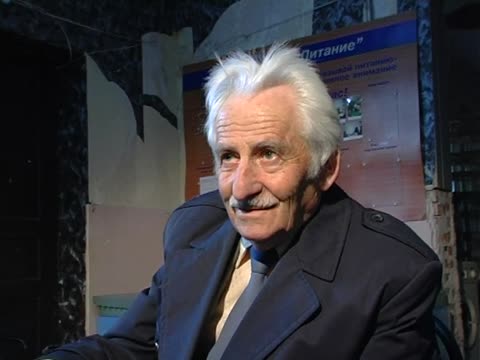
This tape is a continuation of a formal interview with Ilia (Elye) Zelmanovich Kramer (b. 1927 in Berezdov). He recalls that his father was a religious man, who completed kheyder (a traditional religious education for young boys). Although uneducated from a secular perspective, Kramer’s father was talented in mathematics and languages. Kramer briefly describes the atmosphere of his childhood home, mentioning holiday celebrations, and how his parents would pray in the mornings. Kramer’s mother was also educated at a Russian-language gymnasium.
Kramer describes his parents' home: his father was a religious man who had gone to kheyder and was otherwise self-taught, good at mathematics and able to write Russian and speak Polish. Yiddish was spoken at home. He recalls Passover matzo baking and Passover dishes made with matzo meal, and how his father rose early to pray with tefillin. His mother also prayed and had studied for four years at the Russian gymnasium in Berezdov (name as heard), which raised the problem of Saturday attendance. Kerler then turns to Russian, and Lemster announces he will ask some Russian words.
Adds Passover food and matzo baking, the question of the mother's Saturday attendance, and Kramer's father's Russian and Polish.