People › Brukha Fayveshevna Gammer › conversation

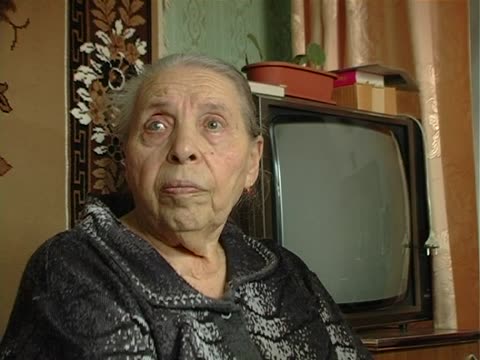
Brukha Fayveshevna Gammer

Khmil'nyk 25 May 2008 Interviewed by Dov-Ber Kerler, Moisei Lemster 63 min · 1 part on 1 tape
Loading the player…
  1. MDV 422 0:00–1:02:35 · 63 min · not online — MCO
Passages

0:00

Food customs for holiday celebration and life today

From the machine transcript

Gammer talks about Passover matzo: how it was baked before Passover, the smell of matzo in the street, and how today's matzo compares with it. She recalls the coarse "shmire" matzo her grandfather's generation ate, and Kerler and Lemster ask about matzo from Israel and steamed matzo. Kerler explains the "poor bread" of the Exodus. The talk then turns to Shavuot dishes made with kasha and cheese, with Kerler asking about the term for them, then to Tisha b'Av and Yom Kippur customs.

Adds Passover matzo in detail, the Shavuot dishes and a question about Tisha b'Av.

8:55

The library before the war

From the machine transcript

Gammer answers questions about a Jewish library before the war, which held books in Yiddish, Russian and Ukrainian. Kerler and she then touch on the amateur theater, which continued after the war in another form. The passage ends in an unclear exchange about cooking.

10:41

Food customs and dialectology

From the machine transcript

A discussion of a baked item (?) and food names with Gammer and a second voice, then questions on the word for a Lithuanian Jew and on Lithuanian Yiddish. Gammer recalls a Lithuanian man who lived in Belarus. Kerler and Lemster ask about a few Yiddish words, kosher meat preparation, the mother's blessings over baking, and the Yiddish word for vodka. The passage ends with a question about Yiddish-speakers' villages and Jews in the area before the ghetto.

Adds the Lithuanian-Jew question, kosher meat and the vodka term, not just food customs.

16:25

Life after the war

after the war Daily life (general) MDV 422 · MCO
From the machine transcript

Gammer talks about what she heard of Jewish life in the town after the war, speaking of fourteen Jews who stayed on, of whom one remained at the end. Kerler then starts a new dialectological question.

Adds a group of fourteen Jews who remained in the town.

18:08

Dialectology and life today

Questionnaire life today Yiddish language and dialectLife today MDV 422 · MCO
From the machine transcript

A long dialectological questionnaire in which Kerler and Lemster give Russian and Ukrainian words and Gammer supplies Yiddish ones, with her daughter commenting. Items include greetings and times of day, mouse, house and building, window pane, deaf, near and far, early and late, cold, honest, pious and ordinary words for family and body. Gammer also talks about how she learned Yiddish, why it matters, and a Khmil'nyk inn. She then identifies men in a photograph (a partisan among them) and a doctor, and Kerler asks about visiting the killing site.

Adds a photograph of named men, the importance of Yiddish and a long questionnaire.

1:00:37

Discussion about potential interviewees

Informal MDV 422 · MCO
From the machine transcript

Kerler asks whether Gammer and her daughter can direct them to the forest killing site by car, and they discuss how far away it is and giving Russian directions. They also discuss a woman, Masha (?), who may speak Yiddish and be interviewed. They briefly mention a coming holiday visit.

Questions put in this conversation

Items of the dialect questionnaire asked here; each link plays the moment.